
Scaling design at Reforge
My Role: First Design hire → Design Manager → Sr. Manager
Building the systems, team, and creative foundation that helped an education technology company scale.


3
promotions
3x
team growth in 18 months
18
courses built with the system
4.5
years helping scale design at Reforge
THE OPPORTUNITY
Before we could scale the team, we needed to scale the way we designed.
When I joined Reforge in 2019, the company was a small team with ambitious plans to grow its course offerings. The visual side of those courses lived largely in Keynote files stored in Dropbox. It worked at the scale we were at. It wasn't going to work at the scale we wanted to reach.
My initial job was to solve that problem.
Reforge's courses turn complex growth concepts into ideas people can understand, remember, and put into practice. That meant visual design wasn't decoration. It was part of the learning experience.
Our existing process relied on individual Keynote files and a growing collection of visual assets. As Reforge prepared to create more courses, we needed a way for designers and strategists to work together while making the work more consistent, accessible, and scalable.
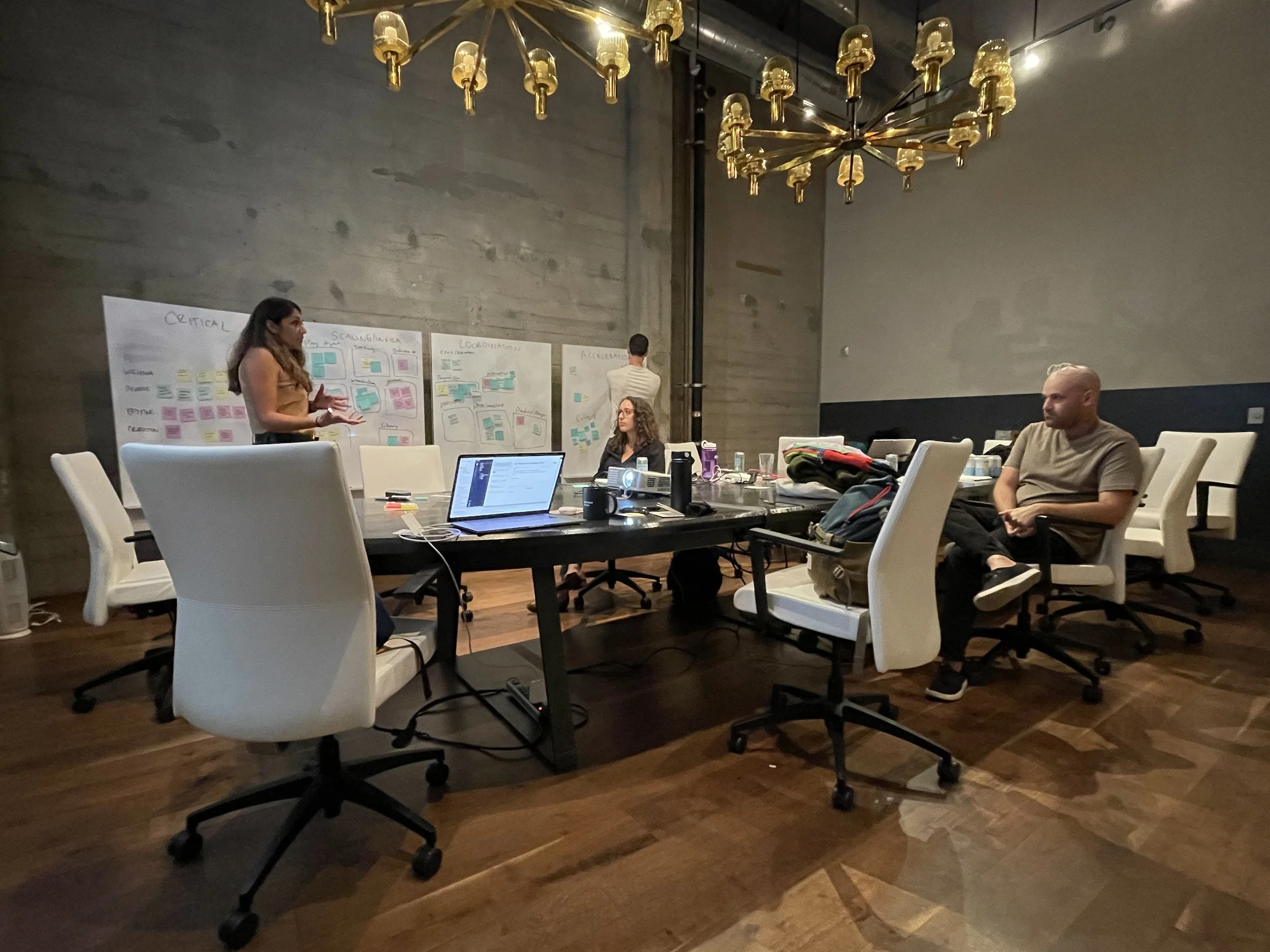
I started by defining what the system actually needed to do: support collaboration, make reusable assets easy to find, accommodate data visualization and complex diagrams, and still give designers enough flexibility to communicate ideas clearly.
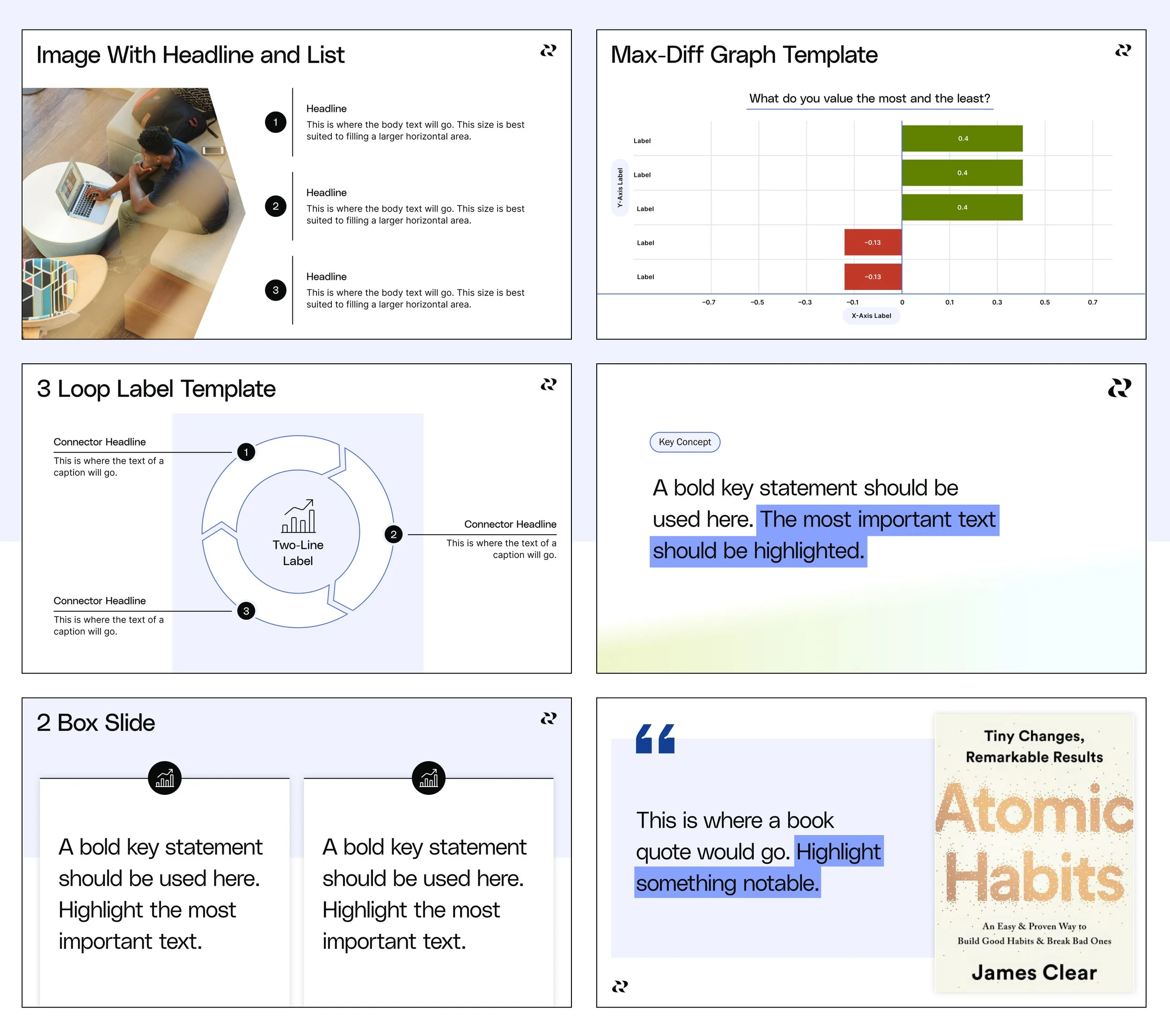
After evaluating the available tools, I chose Figma and built the first version of Reforge's information design system.

Original Keynote slides

Same slides utilizing the design system
BUILDING THE SYSTEM
A system designed for ideas, not interfaces.
Traditional product design systems weren't quite the model. We weren't designing buttons and navigation patterns. We were building hundreds of visual explanations of complex ideas.
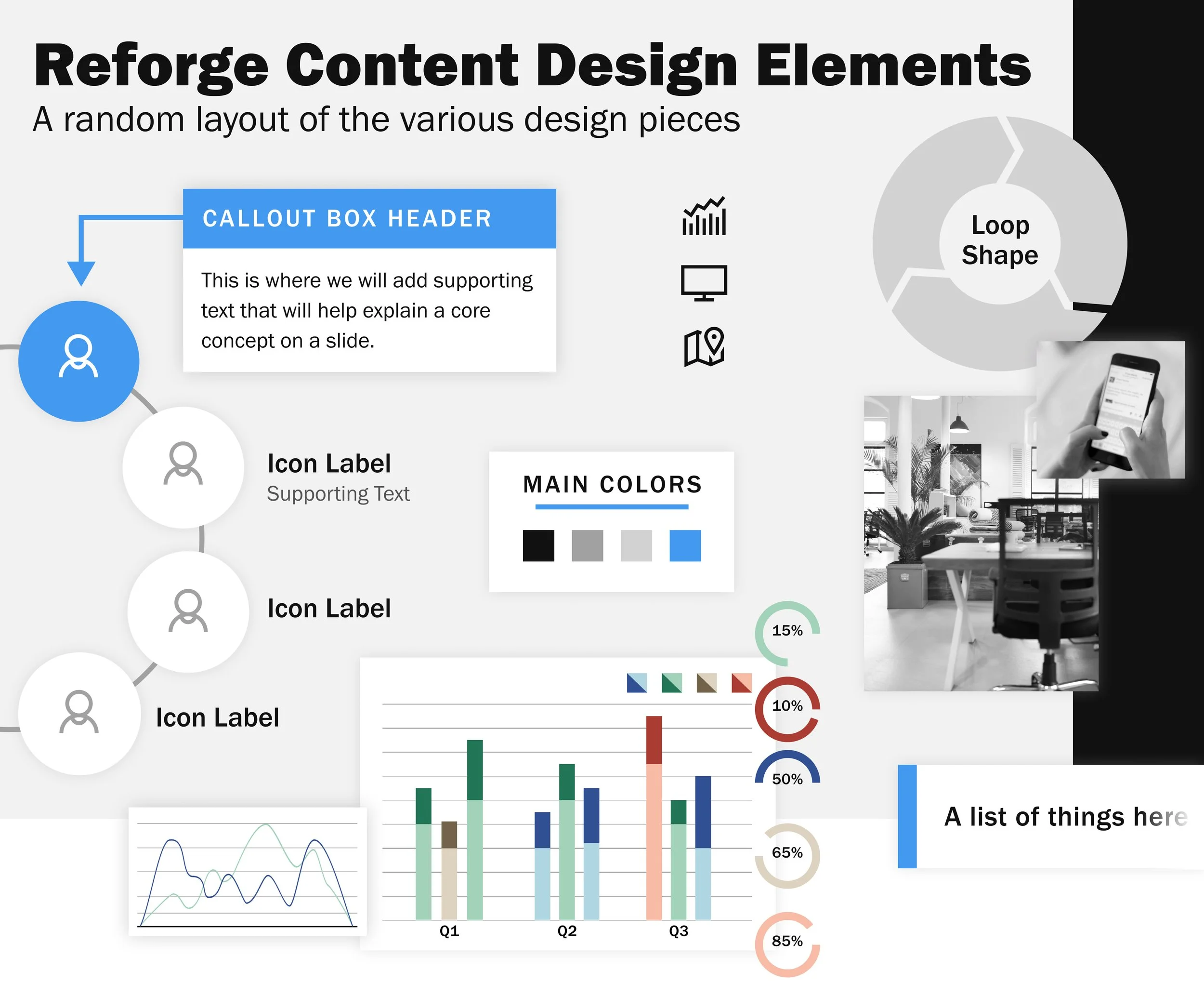
I structured the system around three levels:
Elements
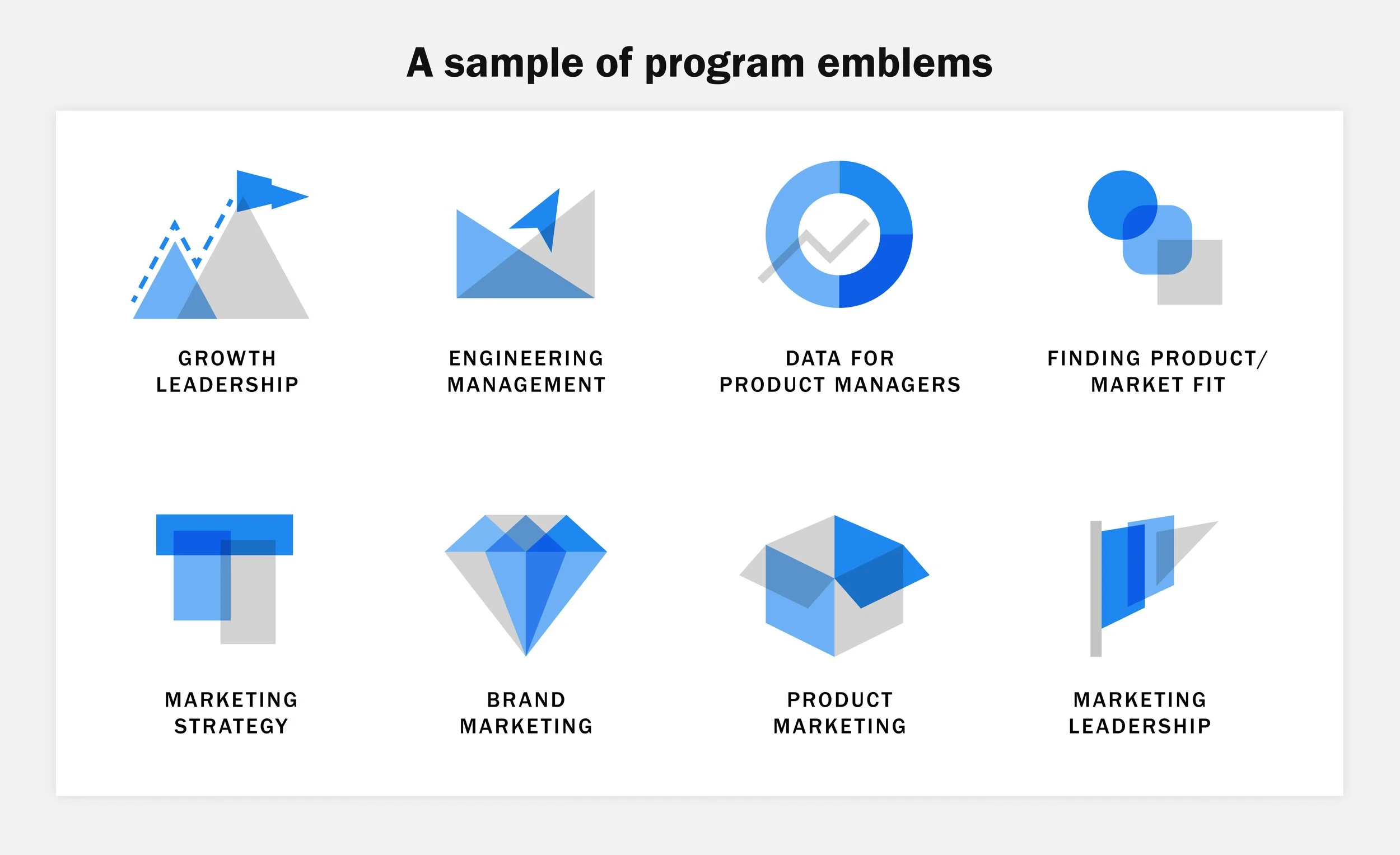
Typography, color, icons, imagery, and foundational visual styles.
Components
Reusable diagrams, cards, callouts, tables, flowchart elements, screenshot containers, and other building blocks.
Templates
Complete layouts for recurring types of course content.
The goal wasn't to make every slide look the same. It was to create enough structure that designers could spend less time rebuilding common patterns and more time thinking about how to communicate the idea.
Constraints should make creativity easier, not harder. (I wrote a bunch about that here →)
SCALING THE TEAM
Eventually the design problem became a people problem.
As Reforge grew, the amount and variety of creative work grew with it. Building a better system wasn't enough. We needed a team capable of owning the work.
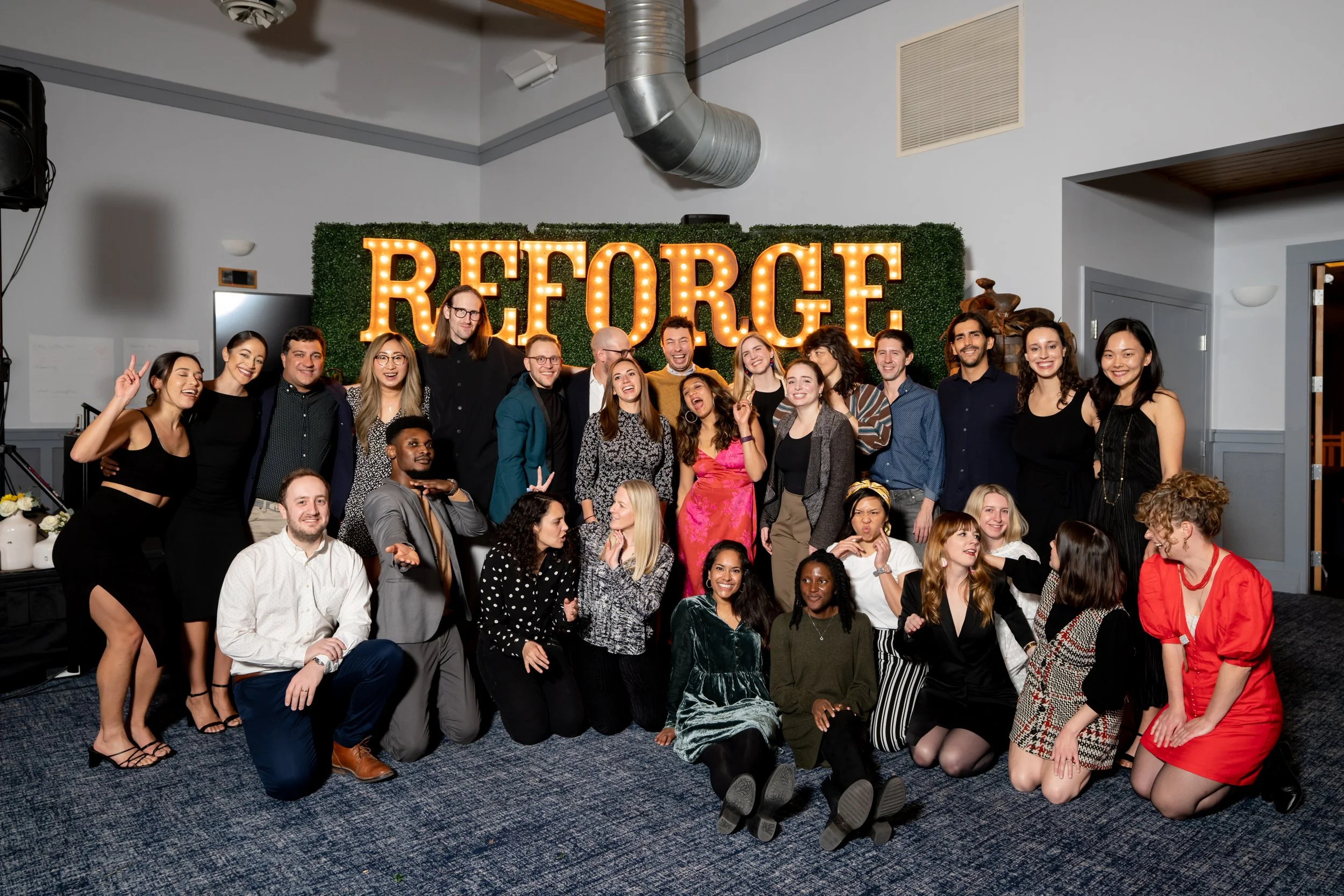
I moved into design management and scaled the design team 3× in 18 months, leading hiring, onboarding, mentorship, retention, and professional development.
But adding people wasn't the goal.
The goal was building a team that could think independently.
Give people context, then trust them.
My approach to leadership is fairly simple: provide clarity around what we're trying to accomplish, establish a high creative bar, and give designers room to figure out how to get there.
I created a Design Team Charter to make those expectations explicit. We defined what the team existed to do, what we expected from one another, and the principles we'd use when making decisions.
Designers were expected to ask good questions, understand the problem behind the request, show their thinking, pitch unexpected ideas, and own their projects.
My job wasn't to have all the answers.
It was to help build a team capable of finding them.
“Michael is the definition of a player-coach, the kind of leader that designers dream of. He advocates wholeheartedly for every individual, while still supporting and challenging the team as a whole. In the three years he’s managed me, I’ve felt trusted, heard, and inspired.”
Brandon PowellEXPANDING THE CREATIVE ORGANIZATION
As the company grew, my role expanded beyond information design.
I eventually led creative direction across teams responsible for information design, marketing design, and video production.
Each discipline had different outputs, but the underlying problem was the same: how do we produce thoughtful, high-quality creative at increasing scale without losing what makes the work good?
That meant developing people, creating processes and guidelines, and giving teams enough structure to move independently.
Growth meant continually figuring out how the brand showed up somewhere new.
During my time at Reforge, I led or contributed creative direction for launches including:
Reforge's course marketplace
Artifacts (real work samples from leading practitioners)
The Reforge podcast (Unsolicited Feedback)
A visual rebrand
New video initiatives
The format changed from project to project—websites, social campaigns, email, product promotion, video—but the job remained largely the same:
Understand the idea, create a clear visual story around it, and build enough of a system that the next piece becomes easier to make.
THE OUTCOME
I came to Reforge to build a design system. I ended up helping build a design organization.
Over 4.5 years, my role evolved from the company's first design hire into leading people and creative strategy across multiple disciplines.
The thing I'm proudest of isn't a particular component, campaign, or website.
It's that the systems and team became bigger than the work I could have made myself.